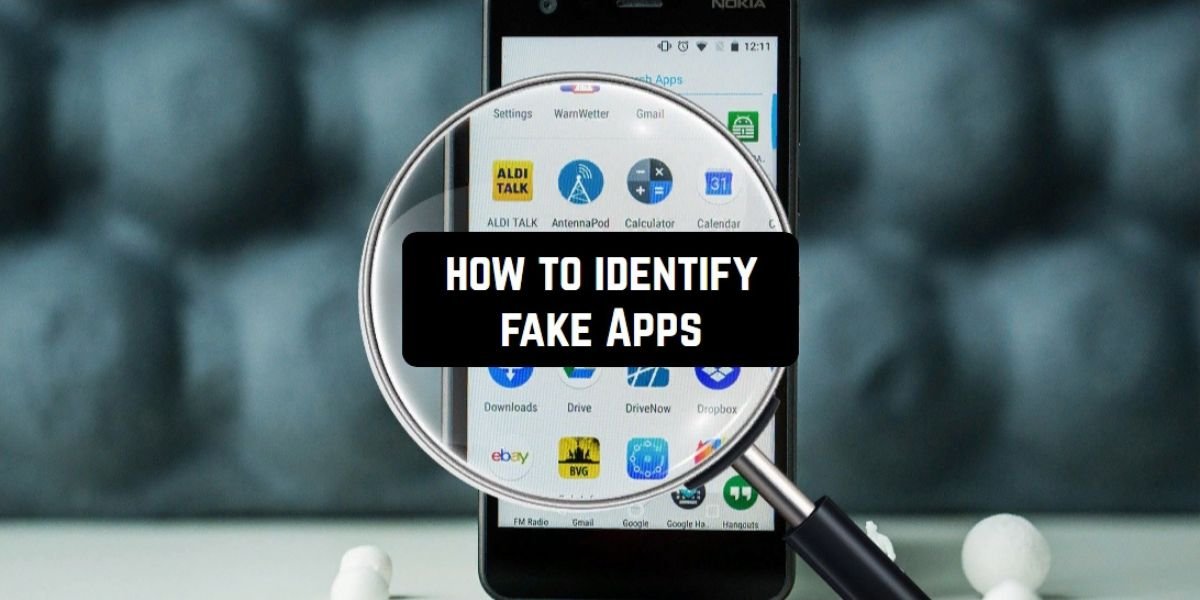
Fake apps on the Apple App Store are more common and more dangerous than most iPhone users realize. Despite Apple’s famously strict review process, fraudulent apps, cloned interfaces, and scam-riddled listings still make their way onto the platform every year, targeting millions of users across the globe.
Whether you’re a consumer worried about downloading the wrong app, a developer whose product is being impersonated, or a business trying to protect users on iOS this guide covers everything you need to know: how fake apps get approved, how to identify them before you tap “Get,” what to do if you’ve already been caught, and how to report them to Apple.
What Exactly Is a Fake App on the App Store?
A fake app is any application on the Apple App Store that deliberately misrepresents itself either by impersonating a legitimate brand, disguising malicious functionality, or trapping users into unauthorized subscriptions.
These are not glitchy apps or poor-quality tools. Fake apps are intentionally deceptive, designed to look real enough to get downloaded.
They fall into several categories:
- Cloned apps — near-identical copies of real apps (e.g., a fake version of your banking app with a slightly different icon)
- Scareware — apps that trigger fake security alerts to push users toward paying for a “fix”
- Adware — apps that generate revenue through aggressive and misleading ad placements
- Subscription traps — apps that launch a free trial and silently charge users after 24–72 hours
- Trojanized apps — apps with hidden malicious code that activates after the review period

Can Fake Apps Really Get Past Apple’s Review?
Yes and they do regularly.
Apple’s App Store Review process is thorough by industry standards, but it is not perfect. Fraudulent developers have developed increasingly sophisticated techniques to slip past automated and human reviewers.
Common bypass methods include:
- Code obfuscation — hiding malicious logic inside layers of seemingly normal code
- Delayed payload activation — the app behaves normally during review, then activates harmful functions after approval
- Metadata manipulation — using misleading titles, descriptions, and screenshots that mimic legitimate apps
- Icon spoofing — copying the exact visual identity of real apps (logo, color scheme, name style)
- Fake review inflation — using bot accounts to boost ratings quickly so the app appears trusted
Apple’s Review Guidelines explicitly prohibit this behavior under Section 4.3 (Spam) and Section 5.2 (Intellectual Property). But by the time a violation is flagged, many users may have already been affected.
Researchers at Sophos
and Kaspersky have both documented repeated waves of iOS apps using “fleeceware” mechanics apps that charge extraordinary subscription fees while providing little to no real functionality.
Which App Categories Are Most Targeted?
Fake apps don’t appear randomly. They concentrate in specific high-value categories where users are more likely to enter financial data, grant sensitive permissions, or pay for subscriptions.
| Category | Common Fake App Type | Primary Risk |
|---|---|---|
| Finance & Banking | Cloned bank/crypto wallet apps | Data theft, fund transfer fraud |
| VPN & Privacy | Fake VPN tools collecting traffic data | Surveillance, data harvesting |
| Cryptocurrency | Fake exchange and wallet apps | Direct financial loss |
| Gaming | Cloned popular titles with malware | Device compromise, fake purchases |
| Productivity | Fake document/PDF scanners | Permission overreach, subscription scams |
| Kids & Education | Cloned learning apps | Child data exposure, COPPA violations |
| Health & Fitness | Fake calorie trackers, health monitors | Biometric data theft |
Globally, the risk spikes during high-traffic events. In the United States, fake tax filing apps surge around April. In India and Southeast Asia, fake UPI payment and e-wallet apps are among the most reported and the Middle East and GCC, fake VPN apps have been documented as tools for traffic interception and the UK, the NCSC has specifically flagged FCA-impersonating financial apps.
How to Identify a Fake App Before You Download It
Bottom line: Always check the developer name, download count, review patterns, and publication date before installing any app especially financial or health-related ones.
Here’s a step-by-step identification process:
- Verify the developer name — The real PayPal app is published by “PayPal, Inc.” Any variation (e.g., “PayPal Mobile LLC” or “PayPal Services”) is a red flag.
- Check the number of ratings — Legitimate apps from major brands have thousands to millions of reviews. A new app with 50 five-star ratings and no written reviews is suspicious.
- Read the negative reviews carefully — Fake apps often have a flood of generic five-star reviews and a cluster of one-star reviews mentioning fraud or unauthorized charges.
- Examine the app screenshots — Blurry, generic, or low-resolution screenshots that don’t match the app’s claimed functionality are a warning sign.
- Look at the publication and update date — A brand-new app claiming to be from a major bank that was first published last week should raise immediate concern.
- Read the Privacy Policy — Fake apps often link to no privacy policy, a blank page, or a policy that doesn’t match the app’s name.
- Cross-check the app on the brand’s official website — Go to the bank, service, or company’s official website and find the “Download our app” link. Compare the developer name and app ID.
For additional verification guidance, this resource on app authenticity checks breaks down how to verify whether an app is legitimate before installing it.
Red Flags Inside an App Store Listing
Beyond the steps above, watch for these specific signals inside the listing itself:
- Name with extra characters or symbols — “G00gle Maps” instead of “Google Maps”
- Copied icon with slight color variation — a PayPal logo in a slightly different shade of blue
- “In-App Purchases” showing unusually high prices — subscription traps sometimes list $49.99/week plans buried in the pricing section
- No linked website or support URL
- App description full of grammatical errors or vague language — “Best productivity app. Make you efficient. Download now.”
- Permissions that make no sense for the app’s function — a flashlight app requesting access to your contacts and microphone
If you want a deeper look at how fake apps can steal your data, that breakdown explains exactly which permissions are most commonly abused.
What to Do If You Already Downloaded a Fake App
Act quickly. The longer a malicious app runs, the more data it can access.
Immediate action checklist:
- Delete the app immediately press and hold the icon, select “Remove App”
- Change your passwords especially for email, banking, and any account you accessed while the app was installed
- Enable two-factor authentication (2FA) on all critical accounts
- Check for unauthorized subscriptions go to Settings → [Your Name] → Subscriptions
- Cancel any subscriptions linked to the fake app
- Request a refund from Apple visit reportaproblem.apple.com and select the charge
- Contact your bank if financial credentials were entered in the app
- Report the app to Apple (see next section)
- File a complaint with your country’s consumer protection body (FTC in the US, NCSC in the UK, ACCC in Australia)
Understanding security threats when installing unofficial apps is also worthwhile some fake apps on the App Store use mechanisms similar to unofficial sideloaded apps.
How to Report a Fake App to Apple
Bottom line: You can report a fake or fraudulent app directly through Apple’s report system. Apple reviews all submissions and removes confirmed violations.
Step-by-step:
- Open the App Store on your iPhone or iPad
- Find the fake app’s listing
- Scroll down to the Ratings & Reviews section
- Tap “Report a Problem” (or visit reportaproblem.apple.com)
- Select “App or App Metadata Infringes IP” or “This app is offensive or otherwise inappropriate”
- Provide as much detail as possible include the legitimate app’s name, developer, and why this listing is fraudulent
- Submit Apple will email a confirmation and review the report
You can also submit an IP infringement claim directly through Apple’s legal form at apple.com/legal/internet-services/itunes/appstorenotices/ if your own brand or app is being impersonated.
For Developers & Brands: What to Do If Your App Is Being Cloned
This is one of the most underreported problems in the App Store ecosystem. Independent developers and major brands alike have discovered cloned versions of their apps sometimes with hundreds of downloads before Apple takes action.
Your action plan:
- Document everything take screenshots of the fake listing, developer name, and your own original App Store listing
- File an IP infringement report with Apple through their official legal notice system
- Send a DMCA takedown notice if the cloned app uses your copyrighted code, assets, or screenshots
- Contact Apple Developer Relations directly through App Store Connect if you are an enrolled developer
- Monitor app stores regularly using brand protection tools like Lookout Security, Zimperium, or Pradeo all of which offer B2B mobile threat intelligence services
- Register your trademarks in key markets this strengthens your legal position when filing takedown requests globally
Under App Store Review Guidelines Section 5.2, Apple prohibits apps that infringe intellectual property rights. Use this language explicitly when submitting your report.
Also see: how to verify an iOS app developeruseful both for end users checking legitimacy and developers building trust signals into their own listings.
App Store vs. Google Play: Which Has More Fake Apps?
| Factor | Apple App Store | Google Play Store |
|---|---|---|
| Review process | Manual + automated | Primarily automated (Google Play Protect) |
| Sideloading allowed | No (without MDM or enterprise profile) | Yes (APK sideloading) |
| Fake app volume | Lower, but not zero | Historically higher |
| Malware discovery rate | Lower | Higher (Android open ecosystem) |
| Removal speed after report | Generally faster | Variable |
The App Store’s closed ecosystem gives it a structural advantage. But that advantage has led to a dangerous false sense of security among iPhone users which is exactly what fake app developers exploit. For more information, you can explore our Apps section.
Legal & Regulatory Landscape
Fake apps don’t just violate Apple’s rules they often violate national and international law.
- United States: The FTC Act Section 5 prohibits deceptive trade practices. Fake apps that impersonate financial institutions may also violate banking fraud statutes.
- European Union: Under GDPR, any app that collects user data without proper consent or a valid privacy policy faces significant regulatory exposure and so do the platforms hosting them.
- United Kingdom: The NCSC regularly issues mobile security advisories, and the FCA actively pursues fraudulent financial app operators.
- India: CERT-In has flagged fake UPI and banking apps repeatedly, given the country’s massive mobile payment adoption.
- Australia: The ACSC provides specific guidance for consumers and organizations dealing with malicious mobile applications.
For developers building on Android and cross-referencing iOS app legitimacy, app package integrity verification is a useful technical reference.
Tools That Help Detect Fake or Suspicious Apps
| Tool | Best For | Type |
|---|---|---|
| VirusTotal | Checking app files/hashes for known malware | Free, web-based |
| Lookout Security | Mobile threat detection for consumers & enterprises | Freemium / B2B |
| Zimperium | Enterprise mobile threat defense | B2B |
| Pradeo | App vetting and brand protection | B2B |
| Apple’s App Privacy Labels | Checking what data an app collects | Built-in (App Store) |
| reportaproblem.apple.com | Reporting fraud & requesting refunds | Official Apple tool |
For those who also want to scan APKs or app packages from other sources, secure APK scanning services and antivirus solutions for mobile apps offer additional layers of verification.
Parental Guidance: Protecting Children From Fake Apps
Children are among the most vulnerable targets. Fake kids’ apps are designed to look like popular educational or gaming titles think clones of Roblox, spelling apps, or drawing tools.
Key steps for parents:
- Enable Screen Time and Content & Privacy Restrictions on your child’s device
- Set apps to require your approval before any download via Ask to Buy (Family Sharing)
- Review all apps on your child’s device periodically check the developer name, not just the icon
- Disable in-app purchases entirely for children’s accounts
Entity Glossary
| Term | Definition |
|---|---|
| Cloneware | An app that replicates the visual design and functionality of a legitimate app to deceive users |
| Scareware | An app that uses fake alerts or warnings to pressure users into paying for non-existent problems |
| Adware | Software that displays intrusive, often misleading advertisements to generate revenue |
| Code obfuscation | The technique of disguising malicious code so it passes automated security scans |
| MDM Profile | Mobile Device Management profile can be abused to install unauthorized apps on iOS devices |
| Fleeceware | Apps that offer minimal functionality but charge extreme subscription fees |
| Trojanized App | A seemingly legitimate app that contains hidden malicious code activated post-installation |
| App Store Review Guidelines | Apple’s official ruleset governing what can and cannot be published on the App Store |
| TestFlight | Apple’s official beta testing platform occasionally abused to distribute unreviewed app versions |
Conclusion
The Apple App Store is one of the safest app distribution platforms on the planet but “safest” does not mean “safe from everything.” Fake apps continue to slip through, targeting consumers with subscription traps and data theft schemes, and targeting developers through brand impersonation and cloneware.
Your best defense is informed skepticism. Verify every app before you download it. Know the warning signs inside a listing. Act fast if something feels wrong. And if you find a fraudulent app report it, both to Apple and to your local consumer protection body.
For developers and brands, proactive monitoring is non-negotiable. The tools exist. The legal mechanisms exist. Use them before the damage is done.
For more updates and guides, visit Apk Sharp homepage.
Frequently Asked Questions
Fake Apps on the Apple App Store are harmful or misleading apps that look real but steal data or money. You can identify them by checking reviews, ratings, permissions, and developer details.
Q2: How do I know if an app on the App Store is real or fake?
Check the developer name against the brand’s official website, look for a large number of genuine written reviews, verify the publication date, and read the privacy policy. Any mismatch between the app’s claimed identity and its metadata is a red flag.
Q3: What should I do immediately after downloading a fake app?
Delete the app, change your passwords, check for unauthorized subscriptions in your Apple ID settings, request a refund through reportaproblem.apple.com, and contact your bank if any financial data was entered.
Q4: How do I report a fake app to Apple?
Go to the app’s App Store listing, scroll to Ratings & Reviews, tap “Report a Problem,” select the appropriate violation type, and submit your report. You can also visit reportaproblem.apple.com directly.
Q5: Can a fake App Store app steal my data?
Yes. Fake apps can request excessive permissions access to your camera, microphone, contacts, and location and transmit that data to external servers. Financial fake apps are specifically designed to capture login credentials.
Q6: What are the most common types of fake apps on the App Store?
The most common types are subscription traps (fleeceware), cloned banking and crypto apps, fake VPN tools, scareware posing as security apps, and cloned gaming apps targeting younger users.
Q7: How can a developer protect their app from being cloned on the App Store?
File an IP infringement report with Apple, submit a DMCA notice, register your trademarks in key markets, and use brand protection platforms like Lookout or Zimperium to monitor for unauthorized copies globally.